
Why Young Adults Are Not Getting Deep Sleep is becoming a major concern today, especially with rising stress, late-night screen habits, and busy modern routines. Nowadays, young adults feel like they are sleeping for 7–8 hours, but are not getting deep sleep hence they have to face tiredness, low energy and brain fog.
A major health concern is rapidly growing in today’s modern lifestyle: young adults are not getting enough deep sleep. Whether they are students, working professionals, or entrepreneurs, everyone faces the same problem the body doesn’t feel refreshed even after sleeping at night.
Deep sleep is scientifically considered the most important sleep stage, because during this phase the body repairs itself, hormones balance, and the brain completes the detox process. But lack of deep sleep has become a trend among today’s youth, and there are multiple reasons behind it.
In this blog, we will understand in detail why today’s young generation is not able to get deep sleep, what are its causes, what could be the long-term risks and how it can be improved.
8 Hour Sleep vs 6 Hour Sleep – Which Affects Weight More?
What Exactly Is Deep Sleep?
Deep sleep is also called slow-wave sleep. This is the most restorative stage of the sleep cycle.
Key roles of deep sleep:
- Body tissues are repaired
- Hormones are regulated
- Memory consolidation occurs
- Stress hormones are reduced
- The immune system is strengthened
Young adults should ideally spend 15–20 percent of the night in deep sleep. But due to recent lifestyle patterns, this percentage is dramatically decreasing.
Why Are Young Adults Not Getting Deep Sleep?
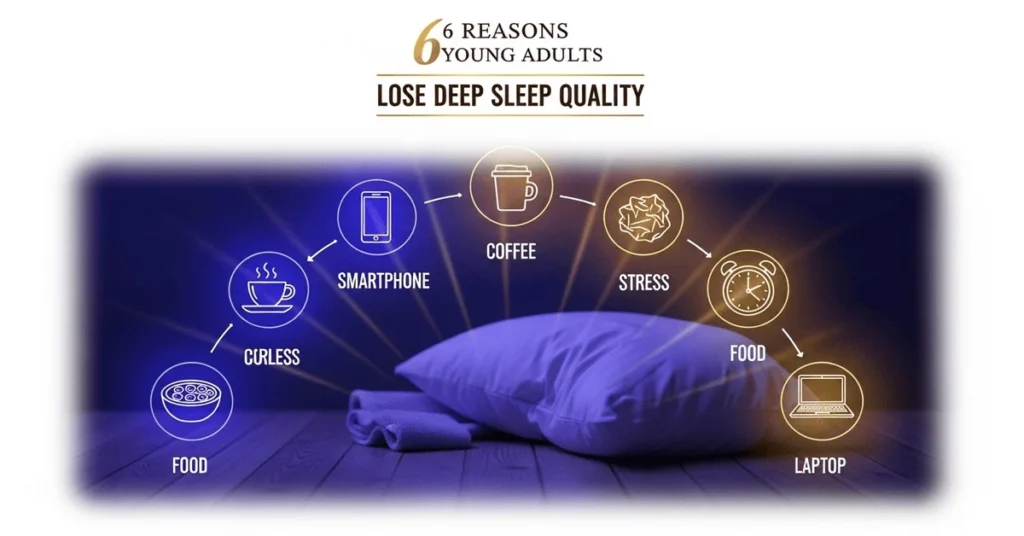
1. Excessive Screen Time Before Bed
Young adults average 4–6 hours of screen exposure per day, extending into the night.
Blue light from phones, laptops, and TVs:
- The brain becomes alert
- Melatonin is not produced
- Sleep cycles are delayed
Researchers are trying to understand why young adults are not getting deep sleep, especially when screen time and stress levels are at an all-time high.
2. Stress, Anxiety and Overthinking
Stress levels among youth have increased significantly over the past 10 years. Education pressure, career insecurity, social comparison, and relationship challenges create a constant mental load.
Stress hormones cortisol:
- Prevents the body from entering a relaxed state.
- Keeps the brain active throughout the night.
- Promotes deep sleep.
3. Irregular Sleep Schedule
Most young adults don’t have a fixed bedtime. Sometimes it’s 11 pm, sometimes it’s 2 am, sometimes it’s 3 am. Many doctors point out that why young adults are not getting deep sleep is closely linked to irregular circadian rhythms caused by late-night social media use.
When the body clock is disrupted:
- The sleep cycle becomes unstable
- The duration of deep sleep dramatically decreases
A major reason why young adults are not getting deep sleep is their inconsistent sleep schedule and late-night exposure to blue light.
4. High Caffeine Intake
Coffee, cold coffee, iced lattes, energy drinks and post-workout drinks—all have become a regular part of the youth lifestyle.
Caffeine:
- Overstimulates the nervous system
- Blocks adenosine (the sleep chemical)
- Sleep is delayed
- Deep sleep is reduced
Consuming caffeine after evening almost eliminates deep sleep.
Ayurvedic Sleep Secrets for Deep Rest
5. Mobile Addiction and Late-Night Scrolling
The most common reason is this.
Young adults spend up to 30 minutes scrolling after bedtime, up to two hours:
- Short videos
- Reels
- Memes
- Chats
- Gaming
This causes the brain to go into hyperactive mode and delays deep sleep onset.
6. Lack of Physical Activity
A sedentary lifestyle also destroys deep sleep.
Lack of regular movement means:
- The body doesn’t get tired.
- Hormonal balance is disturbed.
- Sleep becomes light and restless.
Hormonal imbalance, lack of physical activity, and unhealthy eating patterns are additional reasons why young adults are not getting deep sleep nowadays.
7. Late-Night Eating and Junk Food
When you eat a heavy meal late at night:
- Digestion remains active
- Metabolism remains high
- Heart rate does not slow
- Body does not go into relax mode
Spicy, oily, processed foods significantly decrease deep sleep.
8. Mental Clutter and Information Overload
Young adults every day:
- News
- Reels
- Courses
- Work updates
- Notifications
I keep processing all of this. My brain feels overloaded and I can’t get into writing mode at night.
Symptoms That Show You Are Not Getting Deep Sleep
If you experience any of these 5 symptoms, deep sleep is seriously lost:
- Waking up in the morning feeling tired
- Morning headache
- Daytime sleepiness
- Low motivation
- Mood swings
- Poor memory or concentration
- Brain fog
- Anxiety feeling
- Body pain or stiffness
Long-Term Effects of Poor Deep Sleep
If the deficiency of deep sleep becomes long-term, the risk of serious health issues increases.
Possible problems:
- Hormone imbalance
- Weight gain
- Anxiety and depression
- High blood sugar
- Weakened immune system
- Early aging
- Low productivity
- Slow metabolism
Sleep science clearly proves that deep sleep deprivation causes both body and brain to decline.
How Young Adults Can Improve Deep Sleep Naturally

These actionable tips are scientifically proven:
1. Maintain a Fixed Sleep Schedule
Consistent bedtime helps the body follow its natural circadian rhythm. When you go to sleep and wake up at the same time every day, the body automatically switches to deep sleep mode faster. Why young adults are not getting deep sleep has become an important health question as modern lifestyle habits continue to disturb natural sleep cycles.
Don’t disturb the schedule too much even on weekends, otherwise “social jet lag” occurs which disrupts deep sleep.
2. Reduce Screen Time Before Bed
Late-night screen exposure suppresses melatonin (the sleep hormone). Try starting a digital detox 60–90 minutes before bedtime. If avoiding work is difficult, turn on a blue-light filter on your phone/laptop.
3. Do Light Physical Activity Daily
Daily movement especially in the evenings naturally reduces stress hormones (cortisol). A simple 20–30 minute walk improves digestion, puts the body into a relaxed mode, and promotes deep restorative sleep at night.
4. Avoid Caffeine After 3 PM
Caffeine has a half-life of 6–8 hours meaning even a 4 PM cup of coffee remains active well into the night. This keeps the brain in “alert” mode and delays entry into deep sleep stages (N3). Besides coffee, soft drinks, chocolate, and energy drinks are also caffeine sources; avoid them after dusk.
5. Light Dinner Before 8 PM
A heavy dinner keeps the body in digestive mode, which disrupts deep sleep. Light meals like:
- Khichdi
- Roti sabzi
- Soup
- Daliya
These stomach-friendly options reduce bloating and acidity, which are common sleep disruptors in young adults.
Top Benefits of Eating an Early Dinner: Better Digestion, Weight Loss & Peaceful Sleep
6. Try Relaxing Pre-Bed Rituals
Your brain needs signals that “it’s time to slow down.” These rituals help:
- Warm shower: Regulates body temperature, induces relaxation
- Deep breathing: Calms the nervous system
- Soft music: Slows heart rate
- Herbal teas: Chamomile, lavender, or fennel reduce anxiety
Consistency is more important than perfection.
7. Optimize Your Sleep Environment
For deep sleep, the bedroom environment must be perfect.
- Zero light exposure: use blackout curtains or eye mask
- Cool room (18–24°C): Cooler temperature promotes deep sleep.
- Quiet environment: Light noise also keeps the brain aroused.
- Comfortable bedding/mattress: poor posture causes pain and micro-awakenings
If the surroundings are proper, the body naturally goes into deep sleep stages.
8. Write Down Pending Thoughts
Overthinking and mental clutter is young adults’ biggest barrier. A short “brain dump” before bed helps:
- next day’s tasks
- worries
- reminders
- ideas
When the mind becomes empty, stress is reduced and deep sleep is quickly initiated.
9. Avoid Social Media Before Bed
Short-form videos and fast content create dopamine spikes. They hyperactive the brain, making it take longer to calm down. Algorithms keep you in the “just one more” trap, and this delays your sleep cycle.
The increasing use of mobile phones at night is a major factor why young adults are not getting deep sleep in today’s environment.
10. Keep Your Bedroom Only for Sleep
Using your bedroom as a study, workspace, or entertainment room confuses the brain. When you use your bedroom solely for sleep, your mind quickly shifts into “sleep mode” and deep sleep improves. This is called “stimulus control,” which is a core part of insomnia therapy.
FAQs
Why Young Adults Are Not Getting Deep Sleep
1. Why are young adults struggling with deep sleep nowadays?
Young adults face high exposure to screens, irregular routines, late-night work, stress, and social media overstimulation. All these factors reduce melatonin production, which naturally disturbs deep sleep.
2. How much deep sleep do young adults need?
On average, adults need 1.5 to 2.5 hours of deep sleep per night. But Poor lifestyle routine explains why young adults are not getting deep sleep even after long hours in bed.
3. Does screen time really reduce deep sleep?
Yes. Blue light suppresses melatonin, which puts the brain in alert mode. Result: Deep sleep is delayed and its total duration is reduced.
4. Can stress and anxiety affect deep sleep?
Absolutely. High stress increases cortisol levels, which disrupts the sleep cycle. An anxious mind takes longer to relax, delaying deep sleep stages.
5. Is caffeine harmful for sleep if consumed in the afternoon?
Yes. The half-life of caffeine is 6–8 hours. Afternoon coffee, cold drinks, or energy drinks also maintain alertness at night, which reduces deep sleep quality.
Conclusion
Deep sleep in young adults is being affected majorly by screens, stress, irregular routine, caffeine, junk food, and overthinking. Small but consistent lifestyle changes are very effective in improving deep sleep. Lifestyle experts say one big reason why young adults are not getting deep sleep is because of poor sleep hygiene and lack of a calming bedtime routine.
If you bring a little discipline into your daily routine, deep sleep naturally returns and energy, focus, skin, and immunity all improve.
Disclaimer: This blog is for educational purposes only. Sleep issues can be caused by medical conditions, mental health problems, or hormonal imbalances.